Learning to feel
When I was growing up, I saw my body as a vessel that carried around my brain. And I was fine with this arrangement. My brain had served me well up until that point: it got me through high school and college and helped me get a job as a community organizer in Boston.
Discovering My Body
But sometimes on the drive to work, I would cry. And I didn’t know why I was crying. I mostly just waited for the tears to finish so I could get back to work. My tears helped me discover I had a body.
For years, not feeling kept me in relationship with my family. There wasn't a lot of space in my family for me to have needs, so I learned the best way to get along was to anticipate the needs of others. That often looked like being one step ahead, with my head (brain!) out ahead of my body. The cost of that was disconnection from myself.
SO much of how whiteness shows in me is as a disconnection from my body, the land, and from the people around me. Through feeling more- even when it’s hard- I’m able to regenerate connections in ways that support and allow me to recognize my patterns and make new choices, even under pressure.
Listening for My Body’s Messages
Through hiking and yoga, I began to feel more and cry more.
I realized that my body was sending me messages all the time, which was a sign that I was feeling more of myself. The question was: Can I listen to the messages? Learning to pause and attune, decipher what my body was telling me, and feel for a deeper message was a key part of my healing journey. For example, noticing if my stomach was signaling hunger, feeling temperatures like hot or cold in my core and developing awareness that my tears held emotions were key sensations that allowed me to take a shortcut to understand my inner landcape.
Feeling Other People
After I learned to feel more of myself, I was able to expand my ability to feel other people. Increasing my sensitivity to other people’s feelings made space for me and other people to bring our full selves into our work together.
One time, I was at a big movement conference- and I witnessed a white trans woman being called out. It was someone I was in community with, but I wasn't close to. After everyone had left, they were sitting by themselves, crying. I went and sat with them quietly. They turned to me and asked: “Why are you even here? We’re not even that close”. I replied, “I know, and no one deserves to be alone after something that hard.” We sat and talked for a bit as they settled and then they thanked me and got up and walked away.
In that moment- I realized how much I longed for someone to sit with me when I’ve been in similar situations. I was able to sit with them, stay connected to myself, connect with and witness their pain and just accompany them. Eventually, I could feel what was happening in me, feel what was going on with other people and bring that into my organizing.
Feeling More in Organizing
When I was working at SURJ, after Mike Brown was murdered, I was out in the streets at a protest in NYC. From the protests, I led a mass call of over five thousand white people wanting to take action. At one point I remember saying- “I’m not sure you can hear me with the helicopters flying overhead.” I could feel myself on the noisy streets of Manhattan. Simultaneously, I could extend towards the thousands of people who were on the call and feel for what they were going through. Being in the streets grounded me in the importance of engaging white people in racial justice work. I could feel my purpose. And I could feel that the people on the call were also longing to be a part of interrupting racism and white supremacy in the US.
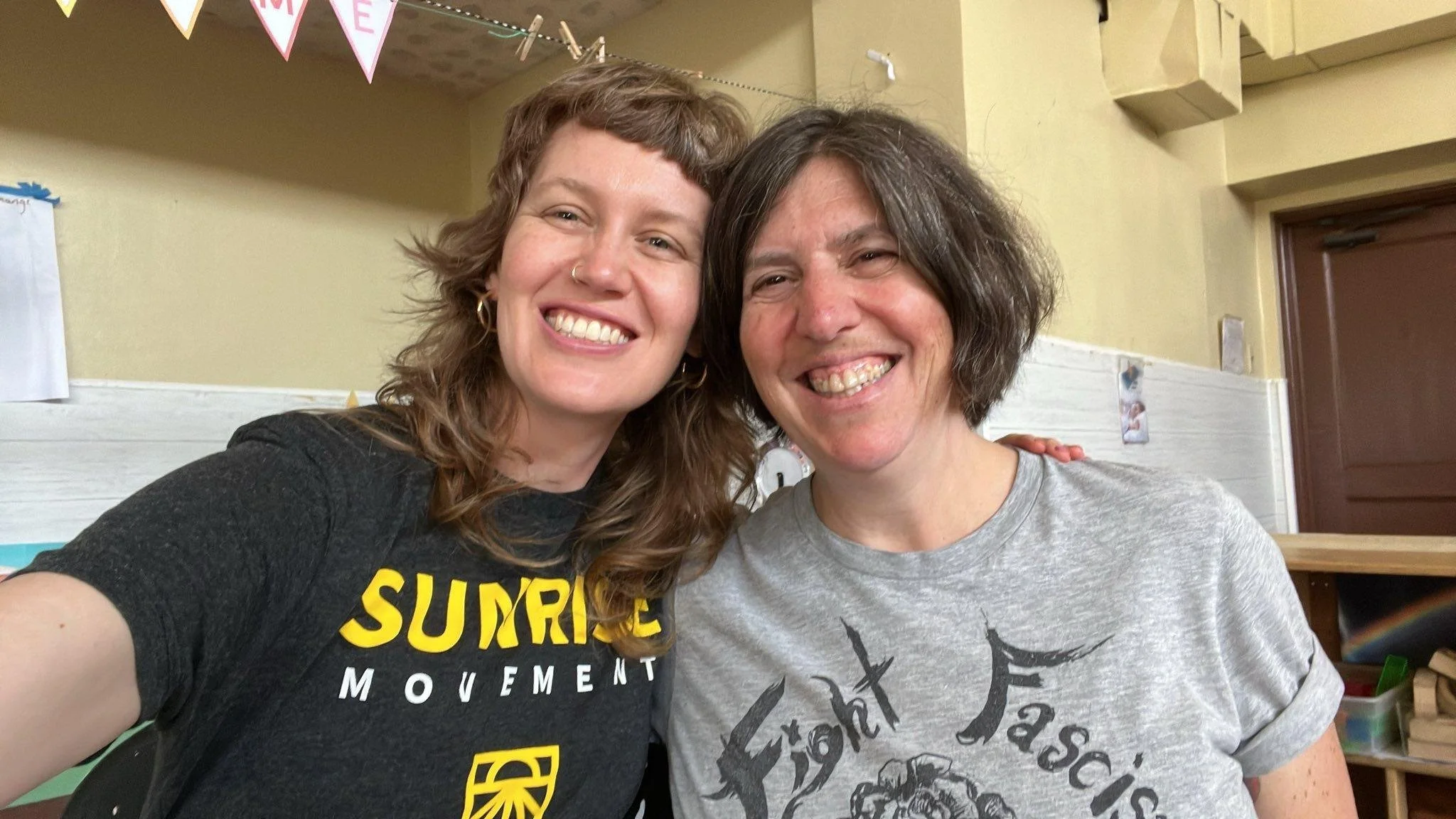
ERJ teachers Sarah Abbott (left) and Dara Silverman (right)
–Dara