Hi there,
When I first heard about somatics I had no idea what it meant. I heard words like “feeling more” and references to my body. I remember thinking: What about my body? Why does that matter?
When my friend Maggie Williams, who is now the Executive Director of the Strozzi Institute for Somatics told me she went to a training and that I would really like it, I was willing to try. I had just left my job, ended a big relationship and was trying to figure out what was next. So another friend and I trekked from New York City down to the suburbs of DC to a random corporate hotel.
After four days, I was hooked. Even the fluorescent lights and drab carpet couldn’t deter me from the new learnings I had about my body and the messages it held.
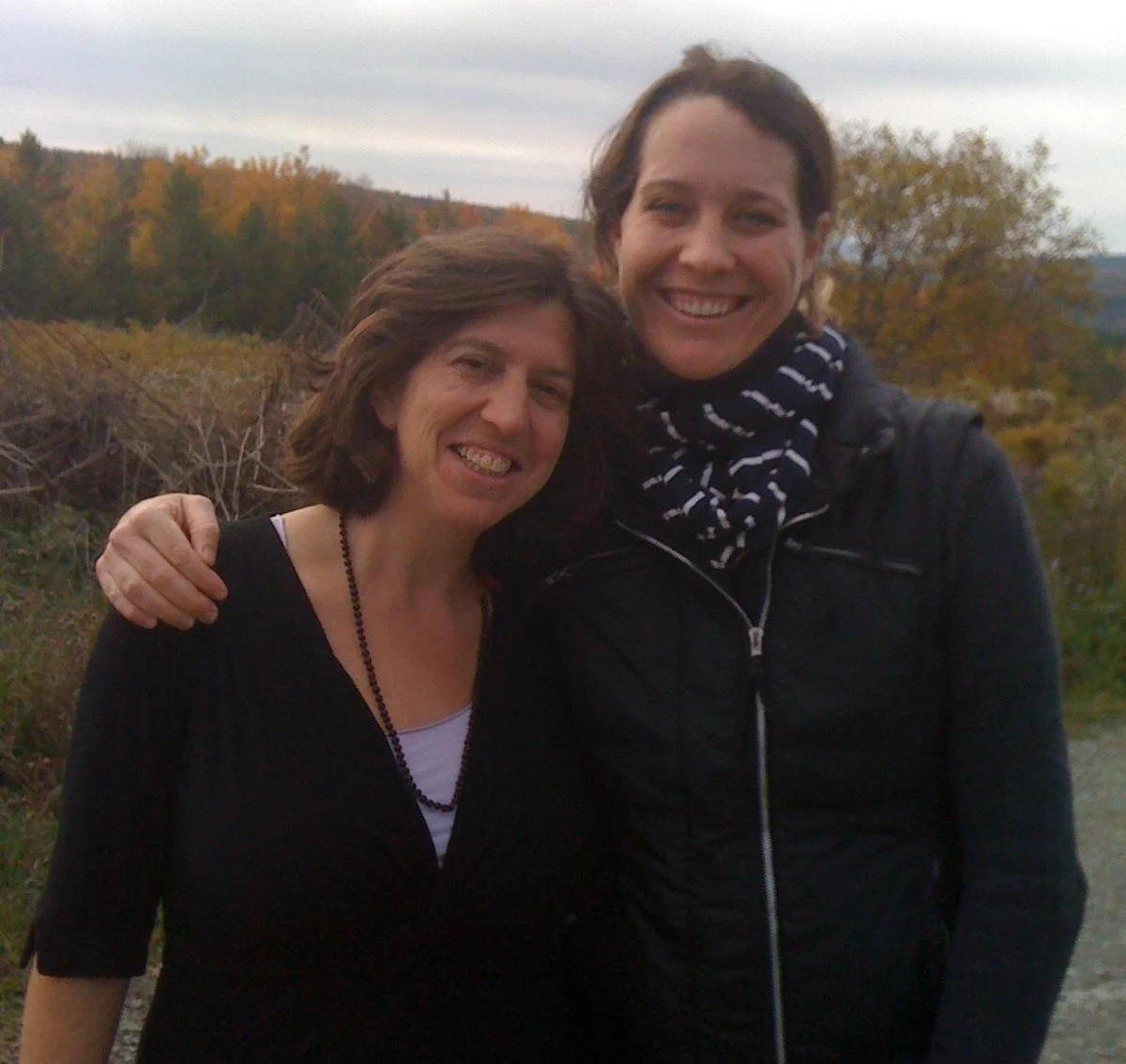
Dara (left) and Maggie (right) in Upstate New York at the time of her invitation.
The Sensations Were The Clues
Up until that point I was pretty disconnected from my body. Sometimes, I would cry. Other times, rage would take over my body and I had no idea what was happening or where it came from.
Somatics gave me language for what was happening- the sensations were clues about what I was feeling.
I started to be able to feel what was happening inside of me. From there, I could start to discern the story of the sensation and what the related emotion was.
One of my teachers, Alta Starr, says that an emotion is a sensation with a story attached. Learning to feel and listening for the deeper meaning became a way for me to understand my internal landscape.
Studying, learning and eventually teaching somatics also helped me feel more about what is going on with the people around me and changed the way I relate to and see the world.
Listening For Other People’s Feelings
I started to realize that I could feel when other people were upset or angry or scared, if I was paying attention. I realized I had been missing pretty clear signals from others, that often led to breakdowns or ruptures. I learned that tuning into my feelings, and listening for the feelings and signals other people sent me could be a potential intervention to avoid a breakdown.
The capacity to feel for what's happening in myself, what’s happening in others and then to make choices and take action from that understanding is one of the things that keeps me coming back to my somatic practices. It doesn’t mean I can always pick-up on what’s happening, but the reaction time is typically shorter. I’m also more able to reflect on my choice points and my relationships are often deeper and stronger.
Collective Practice to Fight White Supremacy
One of my deepest longings is to have a community of people to be in practice with together. Not all individually practicing the way we’ve learned through white supremacy, but to feel and be with each other in collective practice. Based on my conversations with hundreds of students, I know that it is a shared longing, especially for people who are fighting racism and white supreamacy and are looking for love and rigor in community.
Collective practice and building a community of anti racist comrades to take action with is one of the benefits of in-person courses that I hear a lot about from my students. The community of practice and long-term relationships support practice, projects and partnerships. Some practice partners or groups meet weekly or monthly. I know of some buddies who have met for five years and are still going! This is importantbecause the containers of practice and relationship are where I believe deep transformation takes place, providing ground for growth and learning for the sake of collective action.
-Dara